
Crunch - Legs On Exercise Ball Exercise
Builds strength and control by improving stability, coordination, and efficient movement.
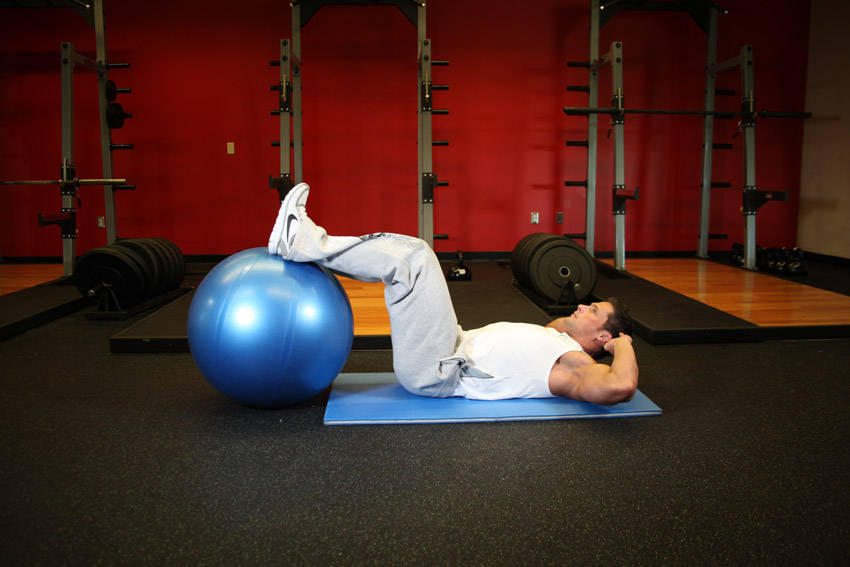

Description
Crunch - legs on exercise ball focuses on controlled movement and maintaining proper body alignment throughout the exercise. The goal is to create tension where needed while avoiding unnecessary strain or momentum. This helps improve movement quality, joint stability, and overall physical control.
Instructions:
- Lie flat on your back with your feet resting on an exercise ball and your knees bent at a 90 degree angle.
- Place your feet three to four inches apart and point your toes inward so they touch.
- Place your hands lightly on either side of your head keeping your elbows in. Tip: Don't lock your fingers behind your head.
- Push the small of your back down in the floor in order to better isolate your abdominal muscles. This will be your starting position.
- Begin to roll your shoulders off the floor and continue to push down as hard as you can with your lower back. Your shoulders should come up off the floor only about four inches, and your lower back should remain on the floor. Breathe out as you execute this portion of the movement. Squeeze your abdominals hard at the top of the contraction and hold for a second. Tip: Focus on a slow, controlled movement. Refrain from using momentum at any time.
- Slowly go back down to the starting position as you inhale.
- Repeat for the recommended amount of repetitions.
Exercise FAQ
How can I make it easier at home?
Lower the intensity, shorten the interval, or swap to a low-impact version. You can still get a strong conditioning effect.
What should my breathing look like?
Breathing should be rhythmic and controlled. If you can’t recover between rounds, reduce the intensity or extend rest.
How do I avoid unnecessary impact or joint stress?
Use softer landings, keep your posture tall, and avoid overstriding. Quality movement reduces wear and tear.
Disclaimer
This content is for educational purposes only and does not replace professional medical or fitness advice. Consult a qualified healthcare provider before beginning any new exercise routine. Exercise safely and listen to your body.
Alternative exercises:

One-Arm Medicine Ball Slam
Start in a standing position with a staggered, athletic stance. Hold a medicine ball in one hand, on the sa...
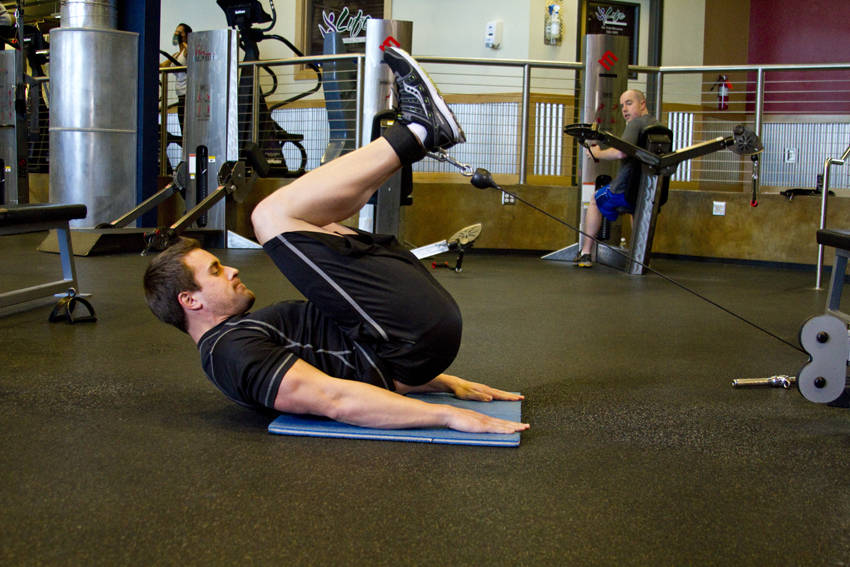
Cable Reverse Crunch
Connect an ankle strap attachment to a low pulley cable and position a mat on the floor in front of it. Sit...
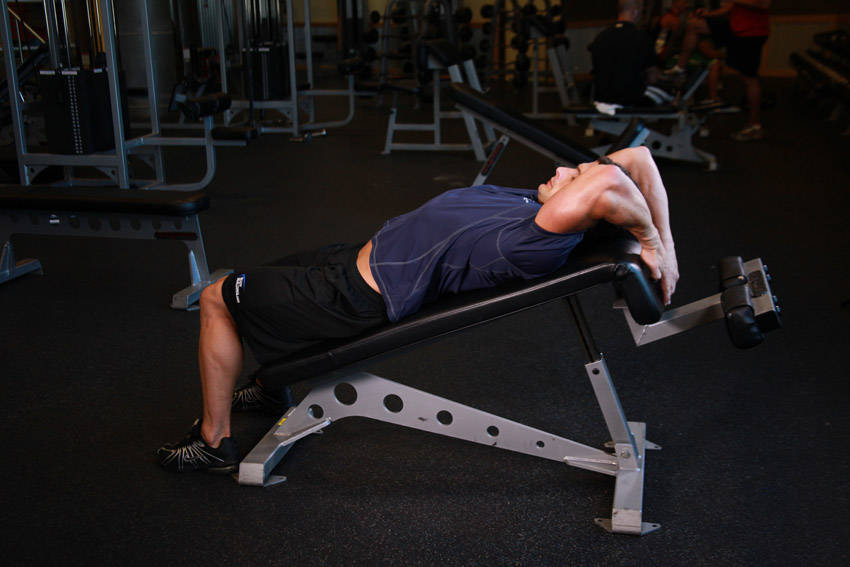
Decline Reverse Crunch
Lie on your back on a decline bench and hold on to the top of the bench with both hands. Don't let your bod...