
Exercise Ball Pull-In Exercise
Builds strength and control by improving stability, coordination, and efficient movement.
Description
Exercise ball pull-in focuses on controlled movement and maintaining proper body alignment throughout the exercise. The goal is to create tension where needed while avoiding unnecessary strain or momentum. This helps improve movement quality, joint stability, and overall physical control.
Instructions:
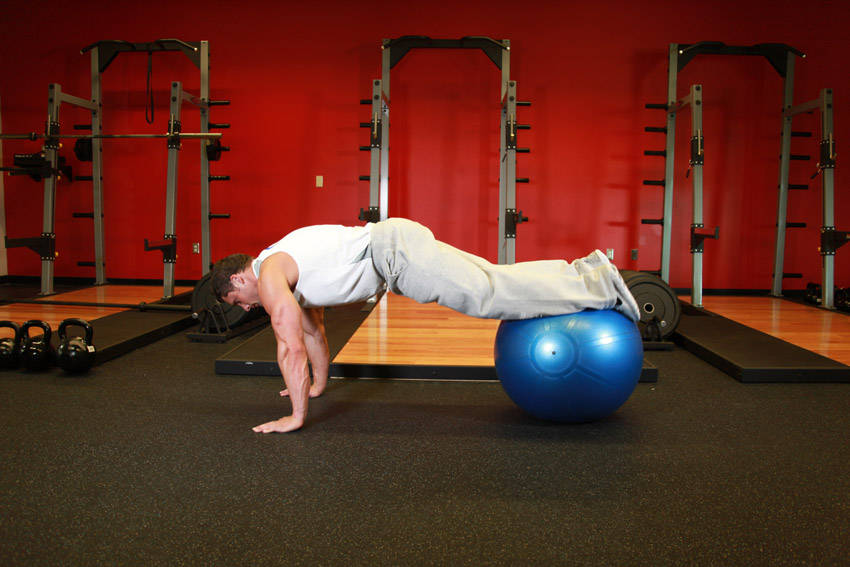
- Place an exercise ball nearby and lay on the floor in front of it with your hands on the floor shoulder width apart in a push-up position.
- Now place your lower shins on top of an exercise ball. Tip: At this point your legs should be fully extended with the shins on top of the ball and the upper body should be in a push-up type of position being supported by your two extended arms in front of you. This will be your starting position.
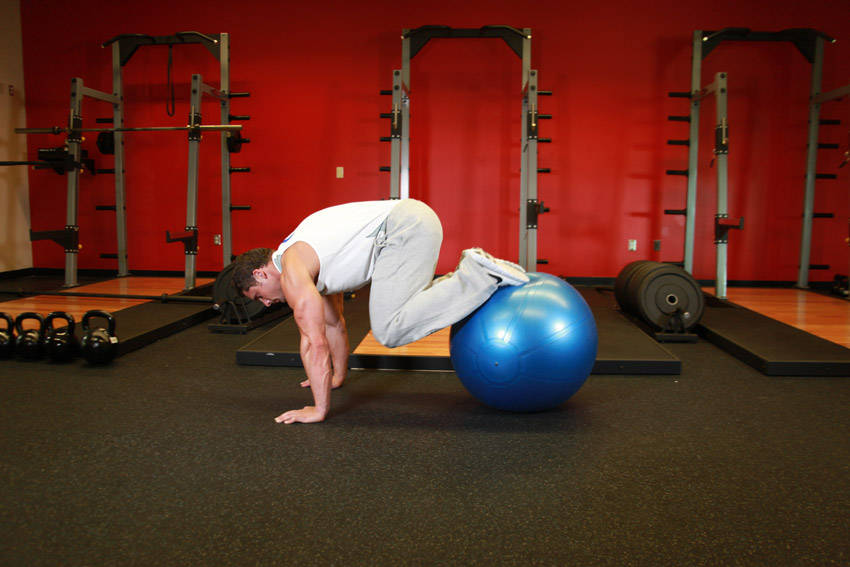
- While keeping your back completely straight and the upper body stationary, pull your knees in towards your chest as you exhale, allowing the ball to roll forward under your ankles. Squeeze your abs and hold that position for a second.
- Now slowly straighten your legs, rolling the ball back to the starting position as you inhale.
- Repeat for the recommended amount of repetitions.
Exercise FAQ
What should I focus on to keep good form?
Move with control and keep your torso stable. Use a range of motion you can own, and stop the set if you need momentum to finish reps.
What’s the safest way to progress over time?
Add a small amount of reps first, then load. If technique slips, step back and rebuild with cleaner reps. Think of it as pulling done with repeatable, clean reps.
Which muscles should feel like they’re doing most of the work?
You should feel the target muscles working while the rest of the body stays braced. If a joint or the lower back is doing the heavy lifting, reduce load and tighten your setup.
Disclaimer
This content is for educational purposes only and does not replace professional medical or fitness advice. Consult a qualified healthcare provider before beginning any new exercise routine. Exercise safely and listen to your body.
Alternative exercises:
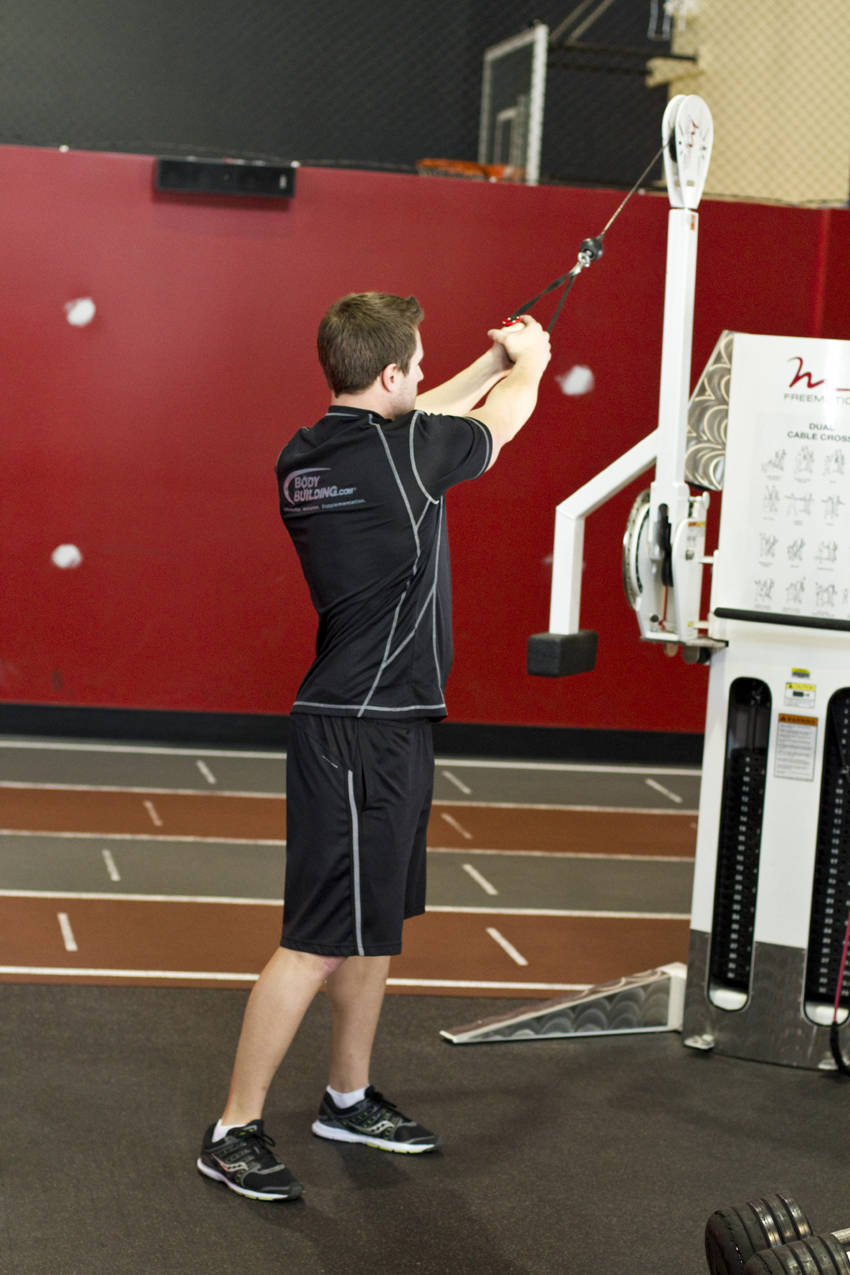
Standing Cable Wood Chop
Connect a standard handle to a tower, and move the cable to the highest pulley position. With your side to ...

Hanging Pike
Hang from a chin-up bar with your legs and feet together using an overhand grip (palms facing away from you...
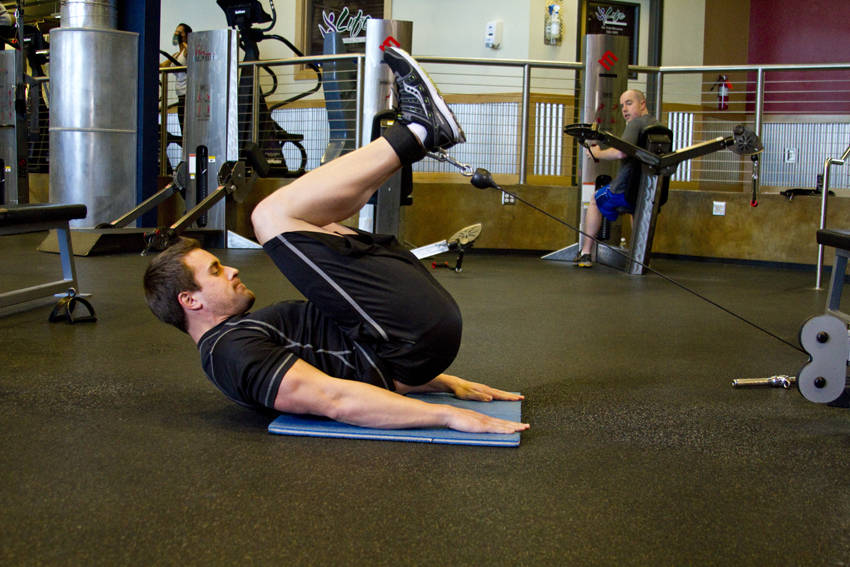
Cable Reverse Crunch
Connect an ankle strap attachment to a low pulley cable and position a mat on the floor in front of it. Sit...