
Handstand Push Up Exercise
Builds strength and control by improving stability, coordination, and efficient movement.
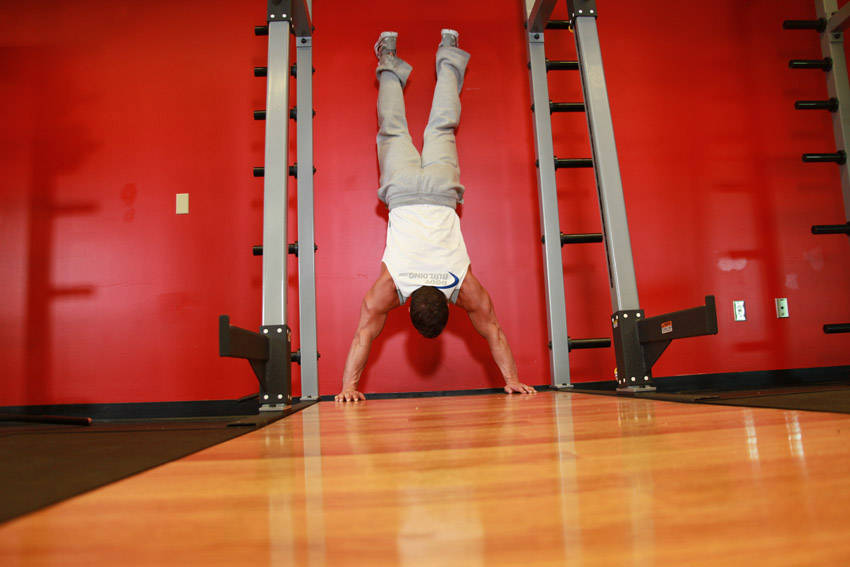

Description
Handstand push up focuses on controlled movement and maintaining proper body alignment throughout the exercise. The goal is to create tension where needed while avoiding unnecessary strain or momentum. This helps improve movement quality, joint stability, and overall physical control.
Instructions:
- With your back to the wall bend at the waist and place both hands on the floor at shoulder width.
- Kick yourself up against the wall with your arms straight. Your body should be upside down with the arms and legs fully extended. Keep your whole body as straight as possible. Tip: If doing this for the first time, have a spotter help you. Also, make sure that you keep facing the wall with your head, rather than looking down.
- Slowly lower yourself to the ground as you inhale until your head almost touches the floor. Tip: It is of utmost importance that you come down slow in order to avoid head injury.
- Push yourself back up slowly as you exhale until your elbows are nearly locked.
- Repeat for the recommended amount of repetitions.
Exercise FAQ
Which muscles should feel like they’re doing most of the work?
You should feel the target muscles working while the rest of the body stays braced. If a joint or the lower back is doing the heavy lifting, reduce load and tighten your setup. Think of it as controlled movement done with repeatable, clean reps.
Does grip or stance matter?
Yes—small changes can shift what you feel and how stable you are. Pick the most controlled position and keep it consistent while you learn the movement. Think of it as controlled movement done with repeatable, clean reps.
How should I program this in a workout?
Use it after your warm-up when you’re fresh. Aim for 2–4 sets and choose a rep range that matches your goal (strength: lower reps; muscle: moderate reps). Think of it as controlled movement done with repeatable, clean reps.
Disclaimer
This content is for educational purposes only and does not replace professional medical or fitness advice. Consult a qualified healthcare provider before beginning any new exercise routine. Exercise safely and listen to your body.
Alternative exercises:
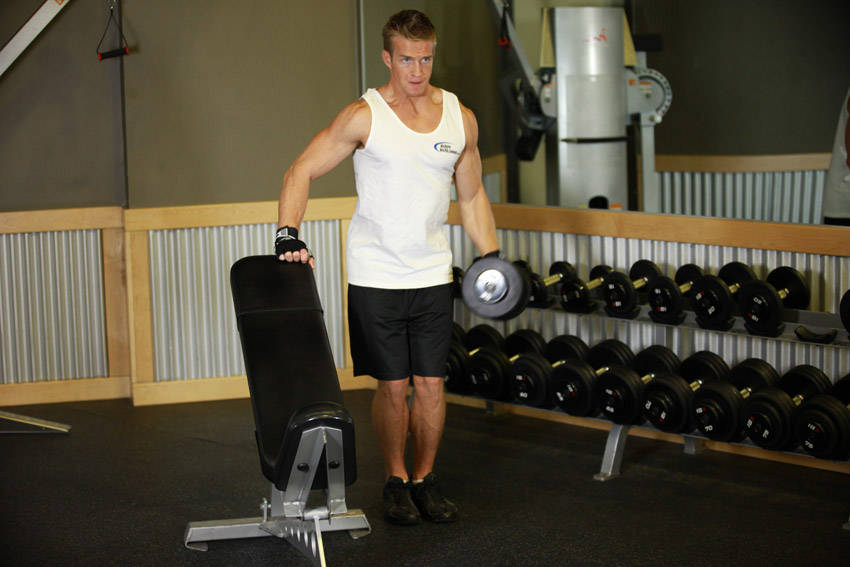
One-Arm Side Laterals
Pick a dumbbell and place it in one of your hands. Your non lifting hand should be used to grab something s...
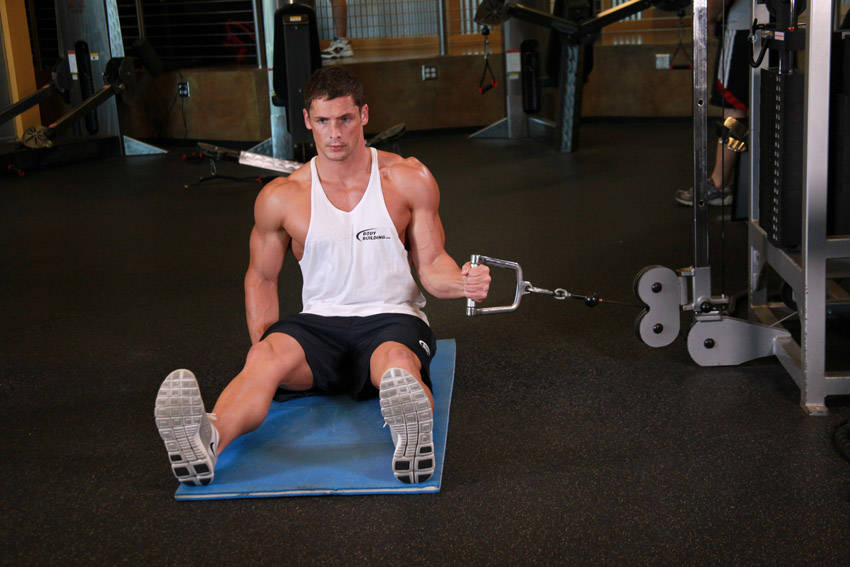
Cable Internal Rotation
Sit next to a low pulley sideways (with legs stretched in front of you or crossed) and grasp the single han...
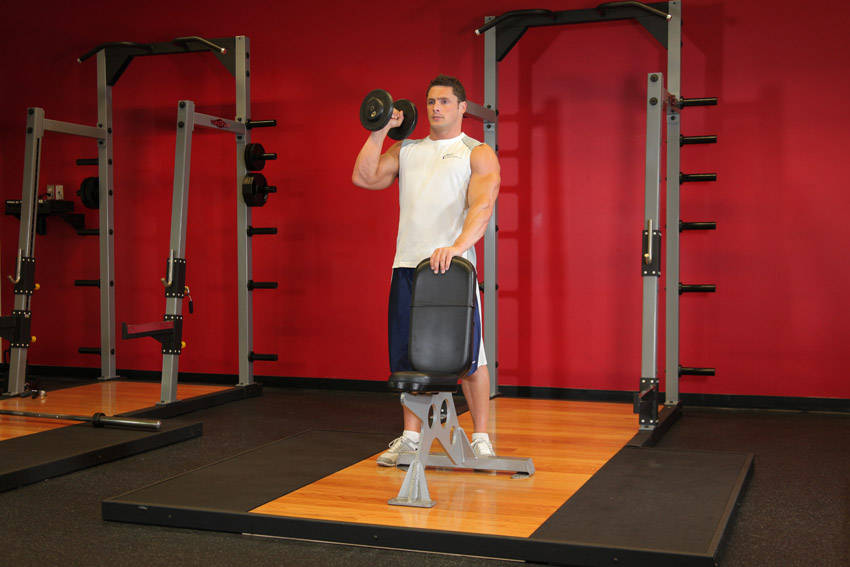
Standing Palm-In One-Arm Dumbbell Press
Start by having a dumbbell in one hand with your arm fully extended to the side using a neutral grip. Use y...