
Exercise Ball Crunch Exercise
Builds strength and control by improving stability, coordination, and efficient movement.
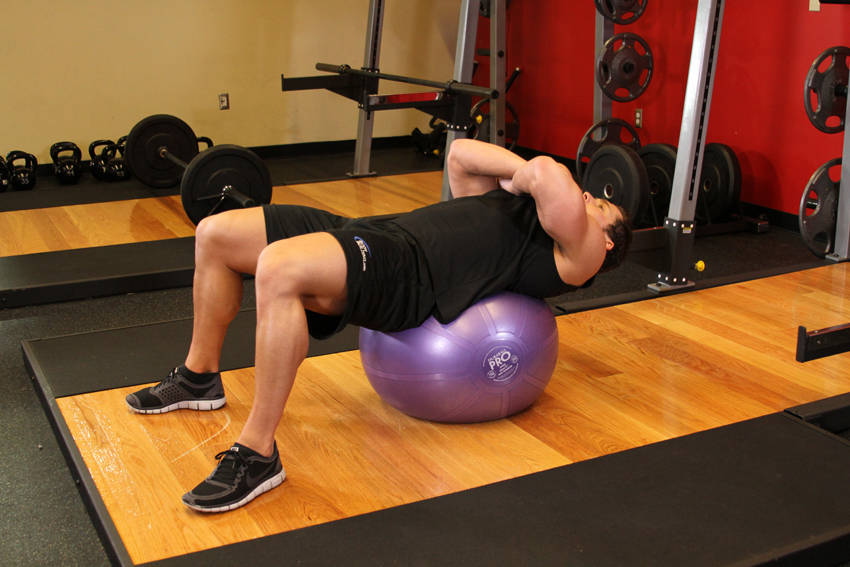

Description
Exercise ball crunch focuses on controlled movement and maintaining proper body alignment throughout the exercise. The goal is to create tension where needed while avoiding unnecessary strain or momentum. This helps improve movement quality, joint stability, and overall physical control.
Instructions:
- Lie on an exercise ball with your lower back curvature pressed against the spherical surface of the ball. Your feet should be bent at the knee and pressed firmly against the floor. The upper torso should be hanging off the top of the ball. The arms should either be kept alongside the body or crossed on top of your chest as these positions avoid neck strains (as opposed to the hands behind the back of the head position).
- Lower your torso into a stretch position keeping the neck stationary at all times. This will be your starting position.
- With the hips stationary, flex the waist by contracting the abdominals and curl the shoulders and trunk upward until you feel a nice contraction on your abdominals. The arms should simply slide up the side of your legs if you have them at the side or just stay on top of your chest if you have them crossed. The lower back should always stay in contact with the ball. Exhale as you perform this movement and hold the contraction for a second.
- As you inhale, go back to the starting position.
- Repeat for the recommended amount of repetitions.
Exercise FAQ
How hard should I push the pace?
Aim for a pace you can repeat. Start moderate, then increase intensity over time while keeping your technique consistent.
How often can I do this per week?
2–4 times per week works for most, depending on recovery and total training load. Keep at least one easier day if intensity is high.
What should my breathing look like?
Breathing should be rhythmic and controlled. If you can’t recover between rounds, reduce the intensity or extend rest.
Disclaimer
This content is for educational purposes only and does not replace professional medical or fitness advice. Consult a qualified healthcare provider before beginning any new exercise routine. Exercise safely and listen to your body.
Alternative exercises:
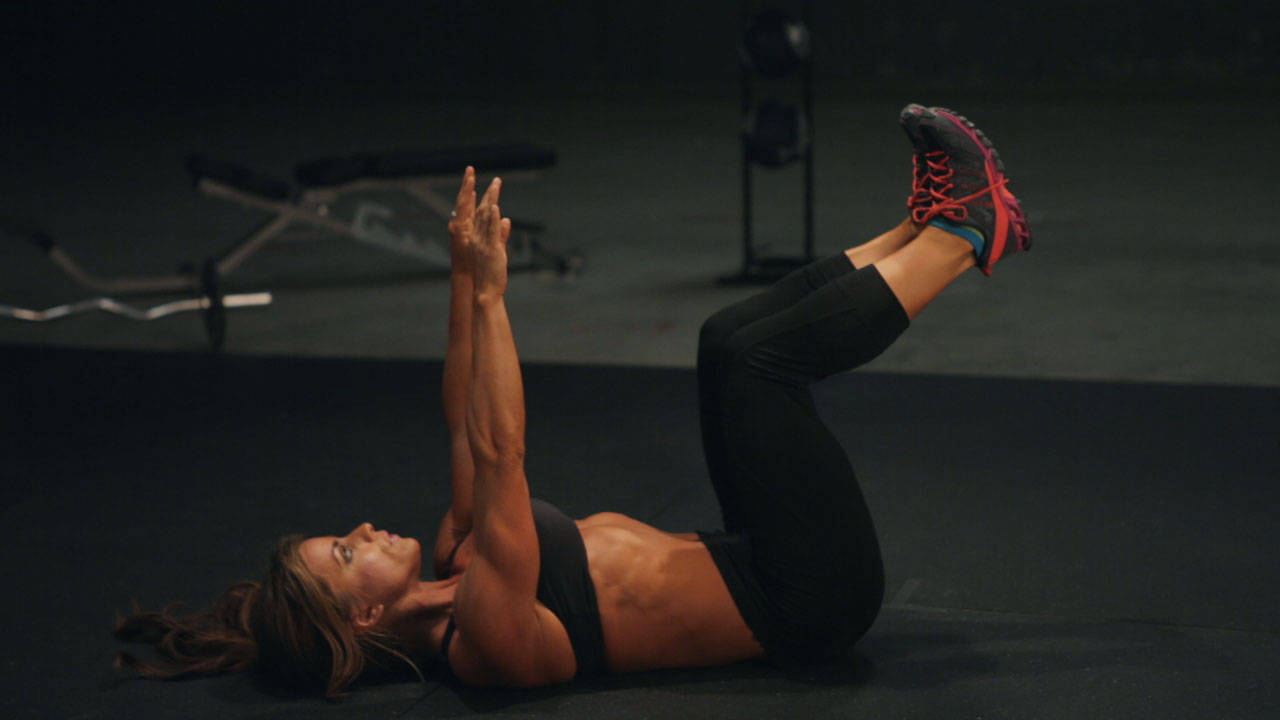
Dead Bug
Begin lying on your back with your hands extended above you toward the ceiling. Bring your feet, knees, and...
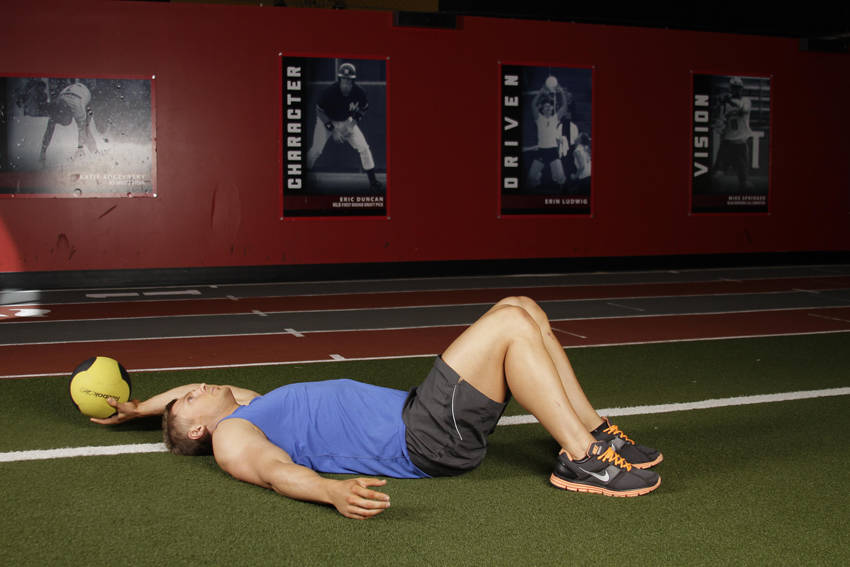
Supine One-Arm Overhead Throw
Lay on the ground on your back with your knees bent. Hold the ball with one hand, extending the arm fully b...
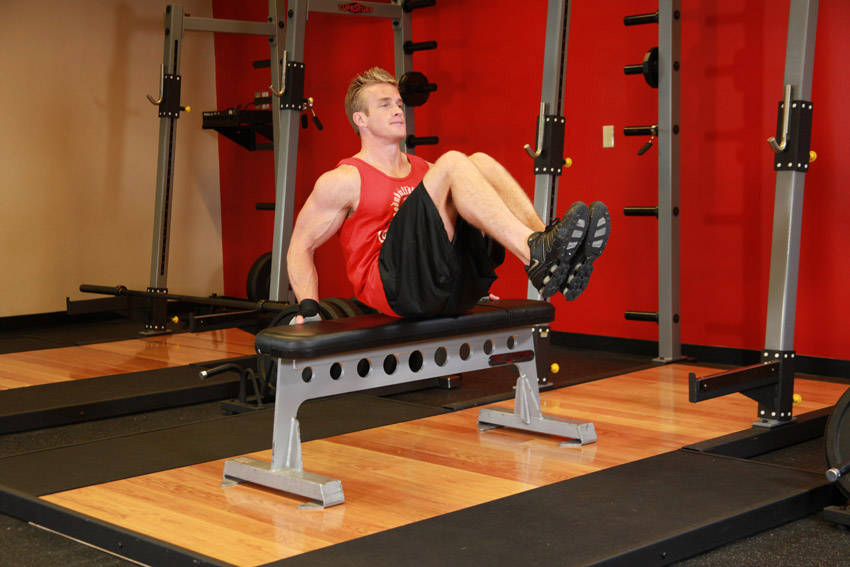
Seated Leg Tucks
Sit on a bench with the legs stretched out in front of you slightly below parallel and your arms holding on...