
Cable Crossover Exercise
Builds strength and control by improving stability, coordination, and efficient movement.
Description
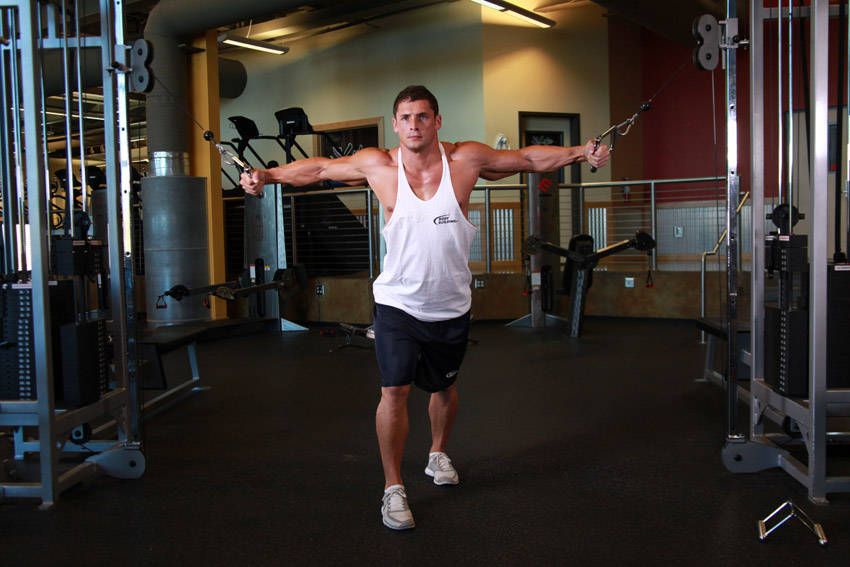
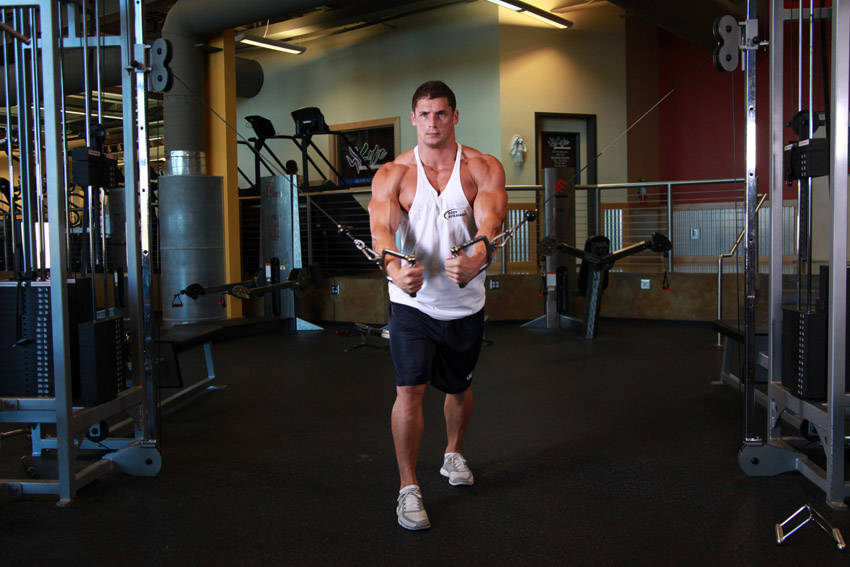
Cable crossover focuses on controlled movement and maintaining proper body alignment throughout the exercise. The goal is to create tension where needed while avoiding unnecessary strain or momentum. This helps improve movement quality, joint stability, and overall physical control.
Instructions:
- To get yourself into the starting position, place the pulleys on a high position (above your head), select the resistance to be used and hold the pulleys in each hand.
- Step forward in front of an imaginary straight line between both pulleys while pulling your arms together in front of you. Your torso should have a small forward bend from the waist. This will be your starting position.
- With a slight bend on your elbows in order to prevent stress at the biceps tendon, extend your arms to the side (straight out at both sides) in a wide arc until you feel a stretch on your chest. Breathe in as you perform this portion of the movement. Tip: Keep in mind that throughout the movement, the arms and torso should remain stationary; the movement should only occur at the shoulder joint.
- Return your arms back to the starting position as you breathe out. Make sure to use the same arc of motion used to lower the weights.
- Hold for a second at the starting position and repeat the movement for the prescribed amount of repetitions.
Exercise FAQ
Where should I feel the effort?
You should feel deep tension through the trunk, not strain in the neck or hip flexors. Adjust the setup if the effort shifts away from the core. Think of it as controlled movement done with repeatable, clean reps.
Should I hold my breath during the effort?
No—use controlled breathing. A steady exhale on the hard part helps you keep tension without losing position.
What’s a common form error with this movement?
Letting the hips drift or the ribs flare. Keep everything stacked so the core does the stabilizing. Think of it as controlled movement done with repeatable, clean reps.
Disclaimer
This content is for educational purposes only and does not replace professional medical or fitness advice. Consult a qualified healthcare provider before beginning any new exercise routine. Exercise safely and listen to your body.
Alternative exercises:

Alternating Floor Press
Lie on the floor with two kettlebells next to your shoulders. Position one in place on your chest and then ...
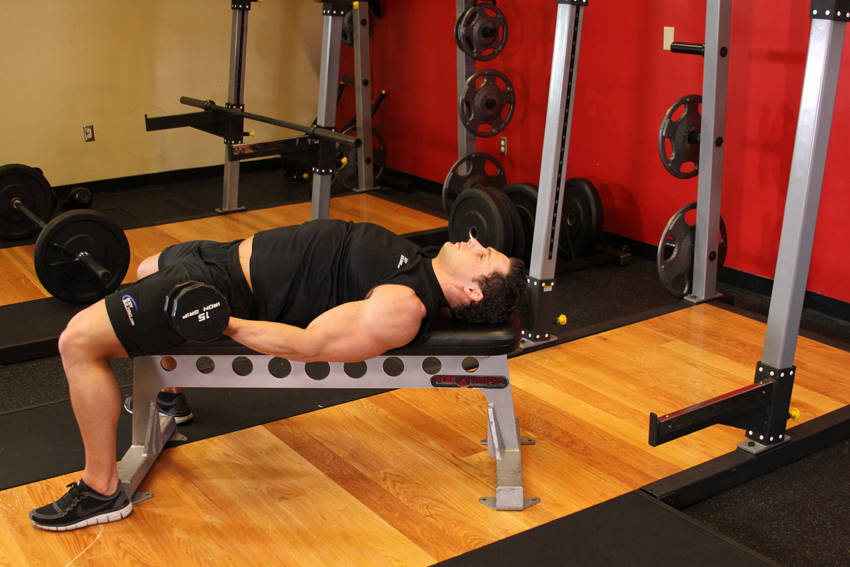
Around The Worlds
Lay down on a flat bench holding a dumbbell in each hand with the palms of the hands facing towards the cei...
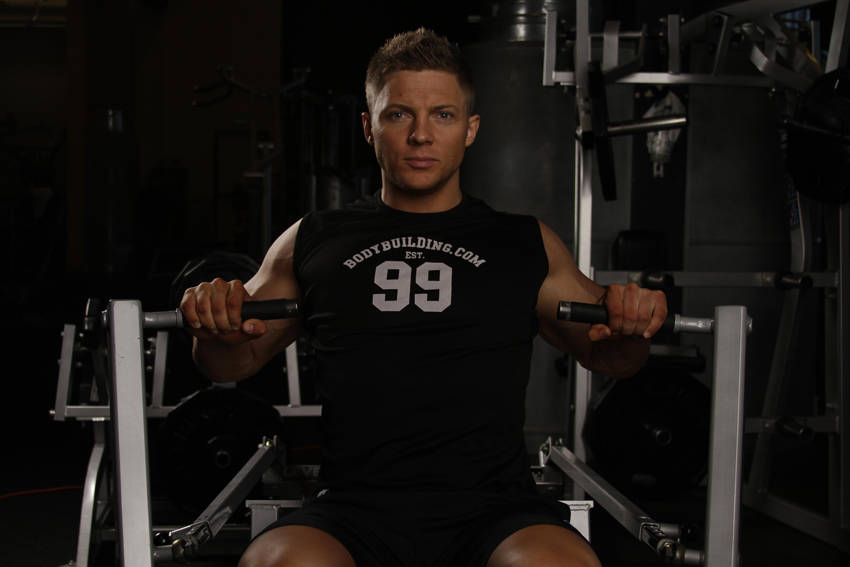
Leverage Chest Press
Load an appropriate weight onto the pins and adjust the seat for your height. The handles should be near th...