
Incline Cable Chest Press Exercise
Builds strength and control by improving stability, coordination, and efficient movement.

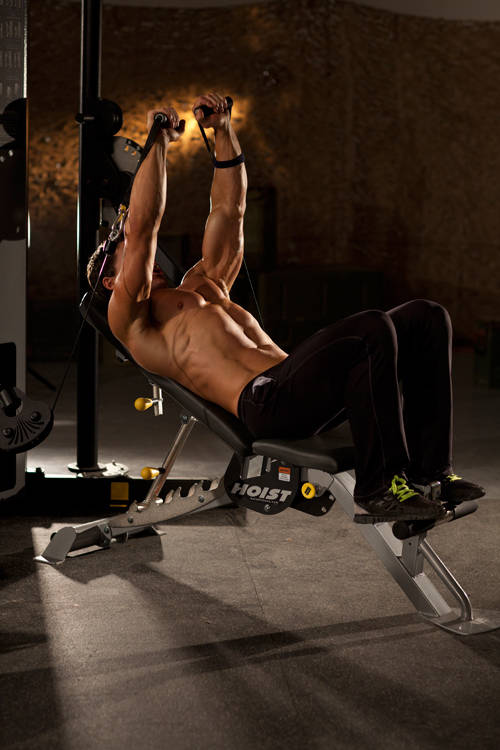
Description
Incline cable chest press focuses on controlled movement and maintaining proper body alignment throughout the exercise. The goal is to create tension where needed while avoiding unnecessary strain or momentum. This helps improve movement quality, joint stability, and overall physical control.
Instructions:
- Adjust the weight to an appropriate amount and be seated, grasping the handles. Your upper arms should be about 45 degrees to the body, with your head and chest up. The elbows should be bent to about 90 degrees. This will be your starting position.
- Begin by extending through the elbow, pressing the handles together straight in front of you. Keep your shoulder blades retracted as you execute the movement.
- After pausing at full extension, return to the starting position, keeping tension on the cables.
Exercise FAQ
When should I place this in my workout?
It works well in a warm-up for activation or at the end for focused core work. Keep the effort controlled, not maxed out. Think of it as pressing done with repeatable, clean reps.
Should I hold my breath during the effort?
No—use controlled breathing. A steady exhale on the hard part helps you keep tension without losing position.
What’s a common form error with this movement?
Letting the hips drift or the ribs flare. Keep everything stacked so the core does the stabilizing.
Disclaimer
This content is for educational purposes only and does not replace professional medical or fitness advice. Consult a qualified healthcare provider before beginning any new exercise routine. Exercise safely and listen to your body.
Alternative exercises:
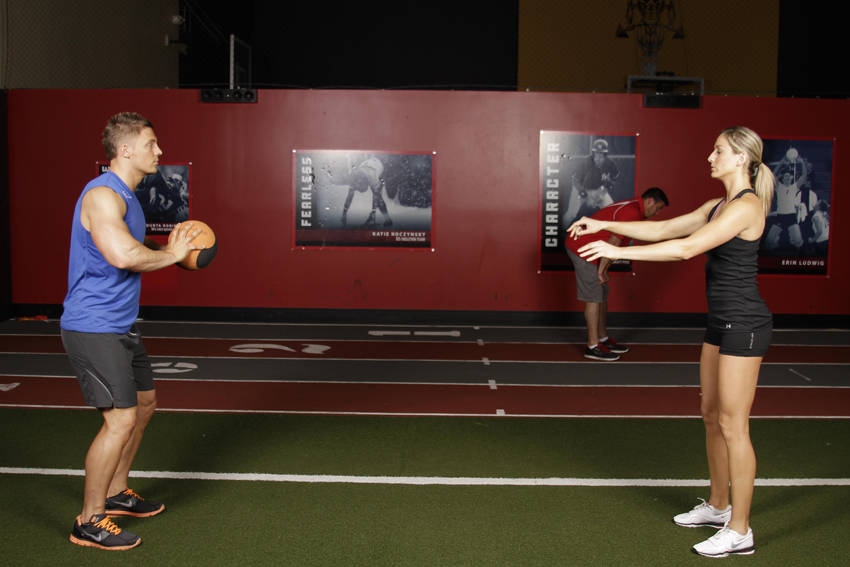
Medicine Ball Chest Pass
You will need a partner for this exercise. Lacking one, this movement can be performed against a wall. Begi...
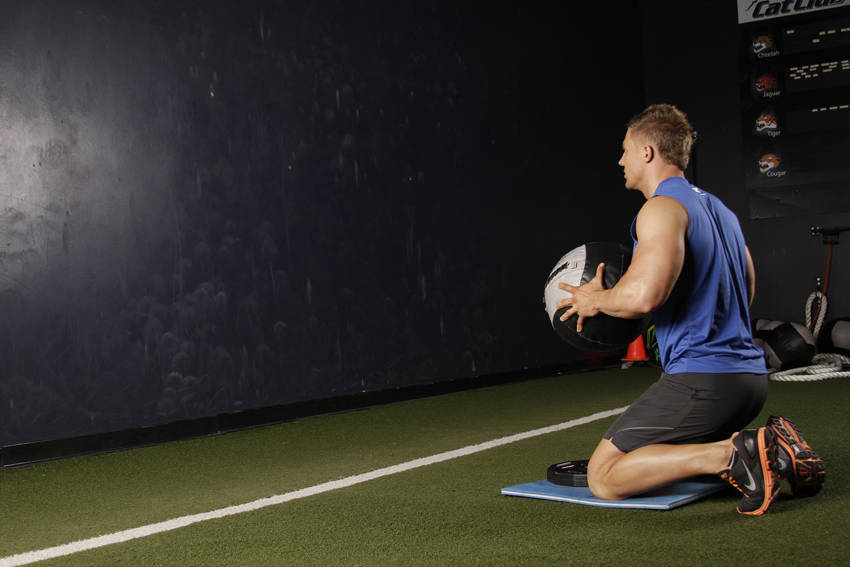
Chest Push (multiple response)
Begin in a kneeling position facing a wall or utilize a partner. Hold the ball with both hands tight into t...
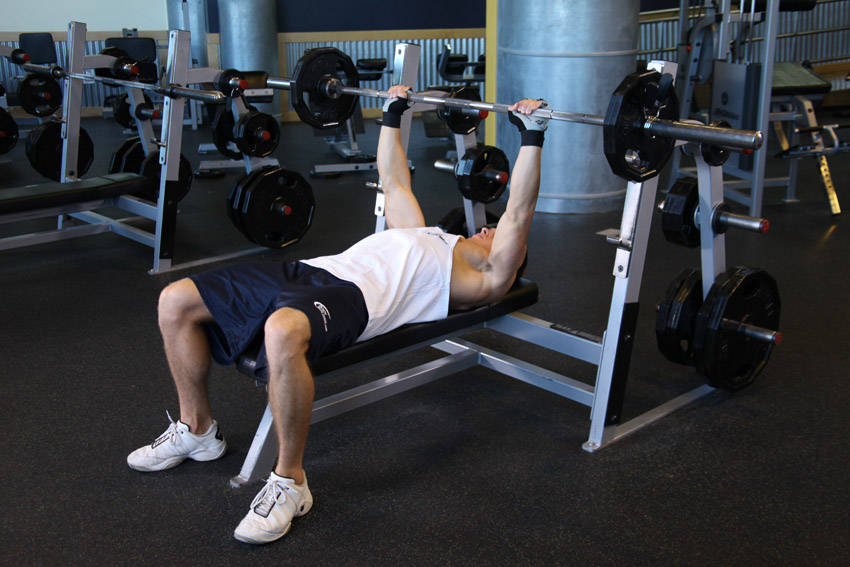
Barbell Guillotine Bench Press
Using a medium width grip (a grip that creates a 90-degree angle in the middle of the movement between the ...