
Dumbbell Rear Lunge Exercise
Builds strength and control by improving stability, coordination, and efficient movement.


Description
Dumbbell rear lunge focuses on controlled movement and maintaining proper body alignment throughout the exercise. The goal is to create tension where needed while avoiding unnecessary strain or momentum. This helps improve movement quality, joint stability, and overall physical control.
Instructions:
- Stand with your torso upright holding two dumbbells in your hands by your sides. This will be your starting position.
- Step backward with your right leg around two feet or so from the left foot and lower your upper body down, while keeping the torso upright and maintaining balance. Inhale as you go down. Tip: As in the other exercises, do not allow your knee to go forward beyond your toes as you come down, as this will put undue stress on the knee joint. Make sure that you keep your front shin perpendicular to the ground. Keep the torso upright during the lunge; flexible hip flexors are important. A long lunge emphasizes the Gluteus Maximus; a short lunge emphasizes Quadriceps.
- Push up and go back to the starting position as you exhale. Tip: Use the ball of your feet to push in order to accentuate the quadriceps. To focus on the glutes, press with your heels.
- Now repeat with the opposite leg.
Exercise FAQ
How can I make this exercise harder without adding a lot of weight?
Slow down the lowering phase, add a brief pause in the hardest position, or increase total reps while keeping form crisp. Think of it as lunge pattern done with repeatable, clean reps.
What should I do if I feel it in the wrong place?
Check your setup, slow down, and reduce weight. If discomfort is sharp or in a joint, stop and choose an easier variation. Think of it as lunge pattern done with repeatable, clean reps.
Does grip or stance matter?
Yes—small changes can shift what you feel and how stable you are. Pick the most controlled position and keep it consistent while you learn the movement. Think of it as lunge pattern done with repeatable, clean reps.
Disclaimer
This content is for educational purposes only and does not replace professional medical or fitness advice. Consult a qualified healthcare provider before beginning any new exercise routine. Exercise safely and listen to your body.
Alternative exercises:

Zercher Squats
This exercise is best performed inside a squat rack for safety purposes. To begin, first set the bar on a r...
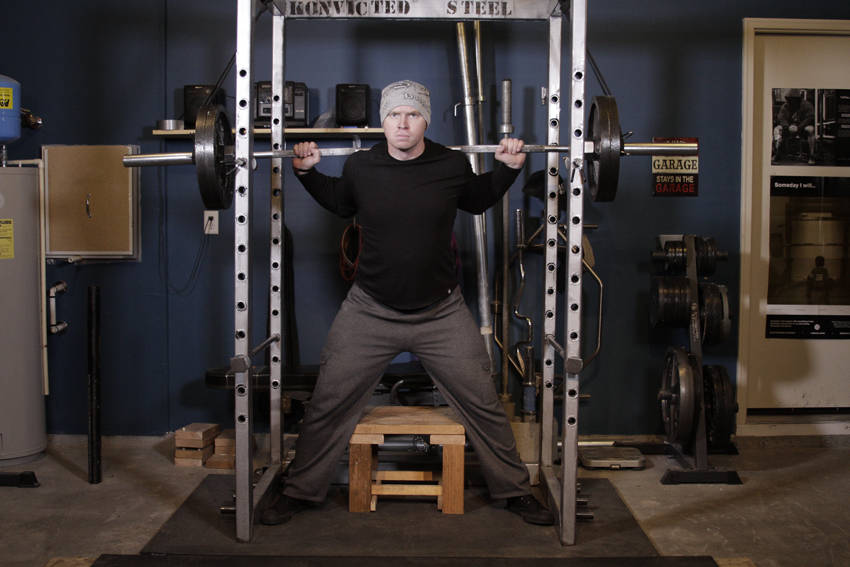
Reverse Band Box Squat
Begin in a power rack with a box at the appropriate height behind you. Set up the bands either on band pegs...
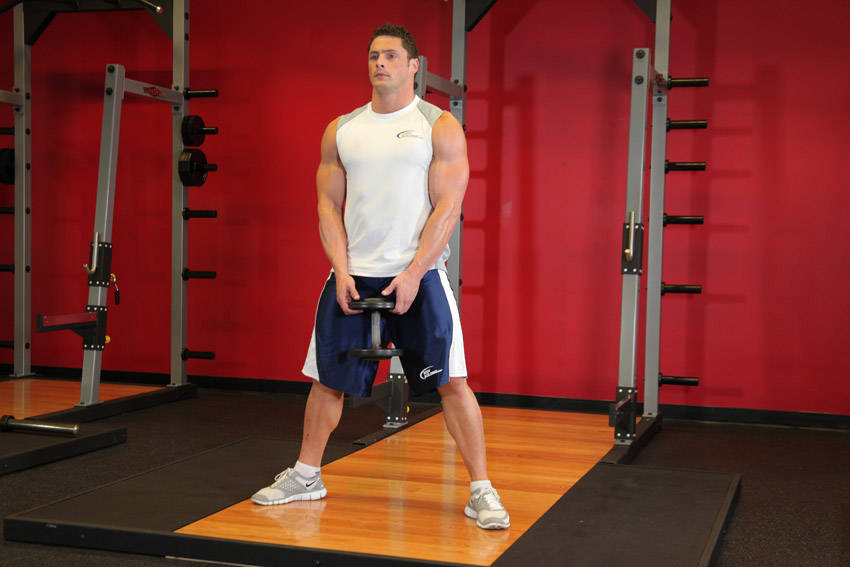
Plie Dumbbell Squat
Hold a dumbbell at the base with both hands and stand straight up. Move your legs so that they are wider th...